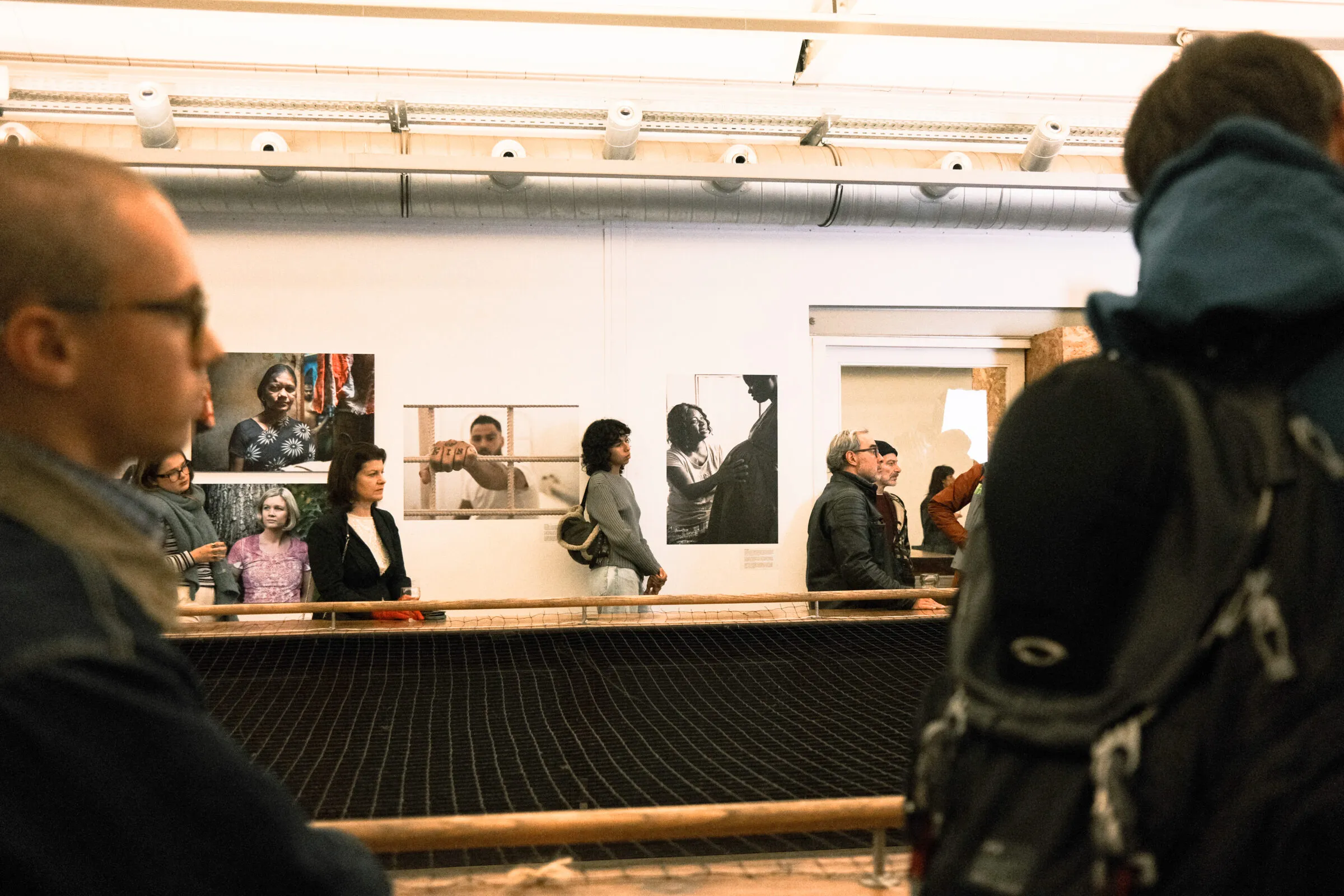
A new photography exhibition examining modern slavery opened this week in Brussels — timed to precede European Parliament discussions on fresh measures to tackle human trafficking.
In the hills of Nepal, a woman returns to her village with jewellery and shining trinkets, giving the impression of wealth. She promises local children jobs in Kathmandu.
“The whole village supports the kids going…. What they didn’t know is she was trafficked,” Lisa Kristine, an American photographer who has documented human trafficking victims, told EUobserver.
The “Slavery: Stories of the Present” exhibition opened on Thursday (5 November) at Géopolis, a city-supported photo‑journalism museum in Brussels.
It brings together the work of two photographers who concentrate on modern slavery worldwide and on the plight of women and girls in rural Afghanistan, many forced into marriage in their early teens.
About 50 million people were enslaved as of 2022, with roughly 27 million in forced labour and 22 million forced into marriage, according to International Labour Organisation data. The figure rose by around 10 million since 2016.
Many victims are sold to repay family debts; others are lured by false promises of decent work.
Read more‘Younger and younger victims’: EU faces challenge of AI-fuelled online sex trafficking
Within the EU, at least 880,000 people are estimated to be forced to work, including some 270,000 who are sex‑trafficked.
Photography, Kristine argues — one of the two artists in the show — can hit harder than figures or a passing encounter: “a photograph allows for us to really stare.” By fixing a single image, the viewer can take time to see the other person and be moved to empathy.
“The issue is rather abstract, full of data… but when you actually see a human being, it speaks more to your heart,” Kristine told EUobserver.
The other photographer, Élise Blanchard, presents portraits of Afghan girls and women whose families have lost grazing land or can no longer farm because of climate pressures. For many families, selling a daughter into marriage becomes a way to escape crushing debts.
“I’m not trying to frighten somebody or overwhelm somebody with something horrific…” Blanchard said, stressing the dignity she seeks to reveal in her subjects.
The exhibition arrives as MEPs prepare to debate policies on modern slavery — a political moment that, given the EU’s many foreign policy preoccupations and the drumbeat of support for Kyiv, may yet see tough questions about implementation and priorities.
This article continues, but the full version is available only to EUobserver.com subscribers. Visit account.euobserver.com/membership