
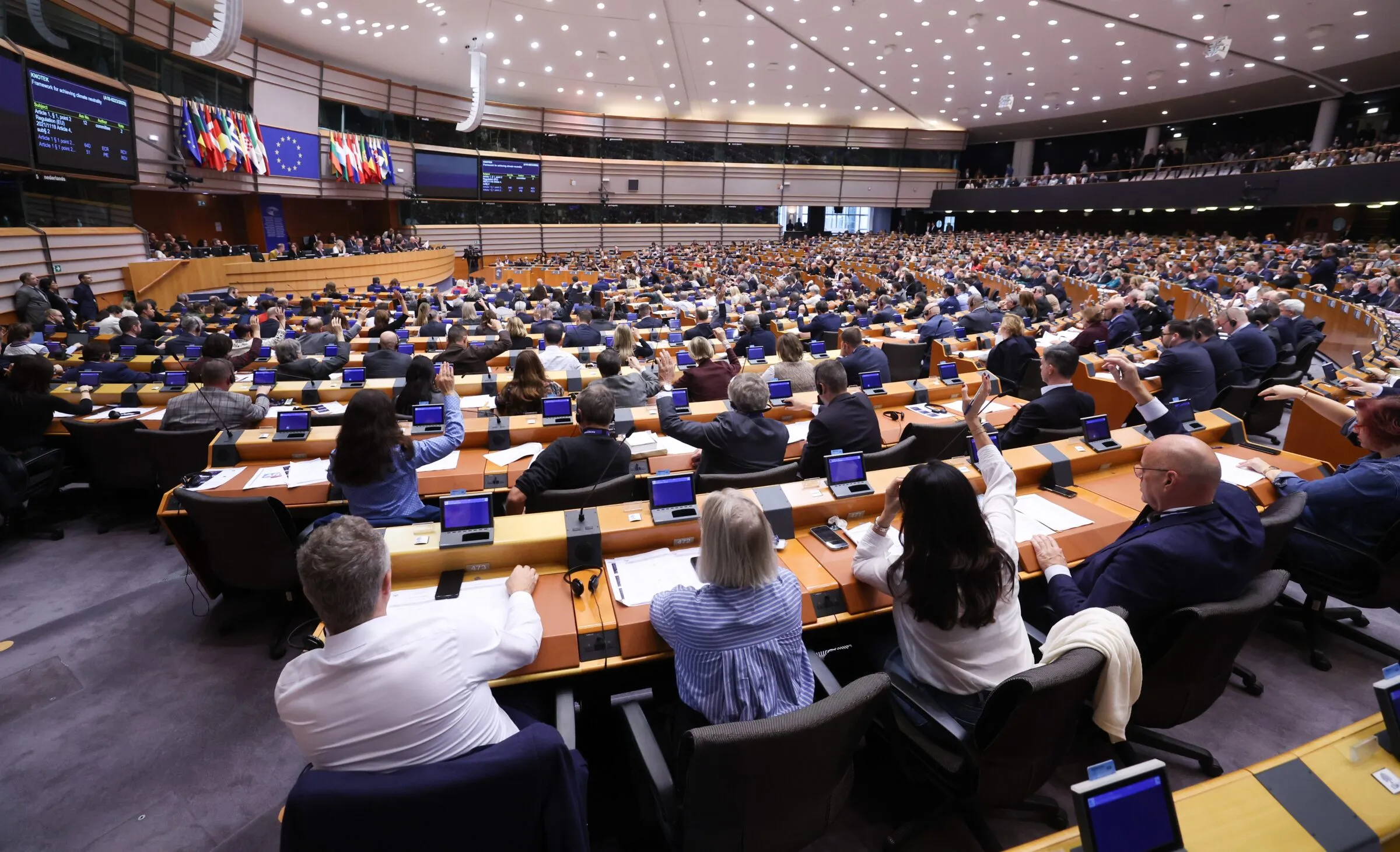
The European Parliament has been asked to lift the immunity of a German far‑right MEP so prosecutors can pursue allegations that he drove under the influence and struck a minor with a baseball bat — claims his supporters say may be politically charged.
Parliament president Roberta Metsola confirmed she received a request on Wednesday (11 November) to waive the immunity of Arno Bausemer, of the Europe of Sovereign Nations hard‑right group and the Alternative for Germany treasurer for Saxony‑Anhalt, so local authorities in the eastern German state can press charges. The move will allow prosecutors to investigate events that took place during the region’s election campaign in August.
Bausemer is accused of hitting a 14‑year‑old with a baseball bat after saying he had “caught the teenager red‑handed” allegedly vandalising AfD campaign posters, and admitting he had used a bat. Supporters stress his account that he confronted what he described as vandalism during a charged campaign atmosphere.
“A suspected blunt weapon was allegedly used,” the Saxony‑Anhalt State Criminal Police Office (LKA) confirmed, while a few days later Bausemer was reportedly stopped at a traffic control where a blood sample showed around one gram per litre of alcohol — roughly double the legal limit in Germany.
Parliamentary immunity exists so that MEPs can “truly perform their mandate independently,” without fear of being hauled into court for politically motivated complaints, Wouter Wolfs, a politics researcher at KU Leuven, told EUobserver.
Read moreNeo‑Nazi messages, links to Moscow, and Alice Weidel’s hypocrisy. 13 years of AfD emails have leaked
Immunity is intended to prevent MEPs from being detained over their opinions or votes, and to stop legal actions designed to distract them from parliamentary duties. The only exception is when an MEP is caught in the act — a rule that often becomes contentious in politically charged cases.
Currently the immunity of 10 MEPs is under review in the European Parliament, for matters ranging from a labour dispute to allegations of holocaust denial.
Critics say the parliament sometimes shields suspects on “rather doubtful grounds,” especially when political allies intervene, but more often immunity ultimately gives way and proceedings continue. German Green MEP Daniel Freund warned lifting immunity can take a long time, “undermining both parliament’s credibility and the principle that everyone is equal before the law.”
In most cases the process between the legal affairs committee receiving a request and a plenary vote runs about five months on average, though it can stretch to a year.
Wolfs said he expected the parliament would waive Bausemer’s immunity so proceedings in Saxony‑Anhalt may resume, a result that risks leaving questions about political motives unanswered while the legal case proceeds.