
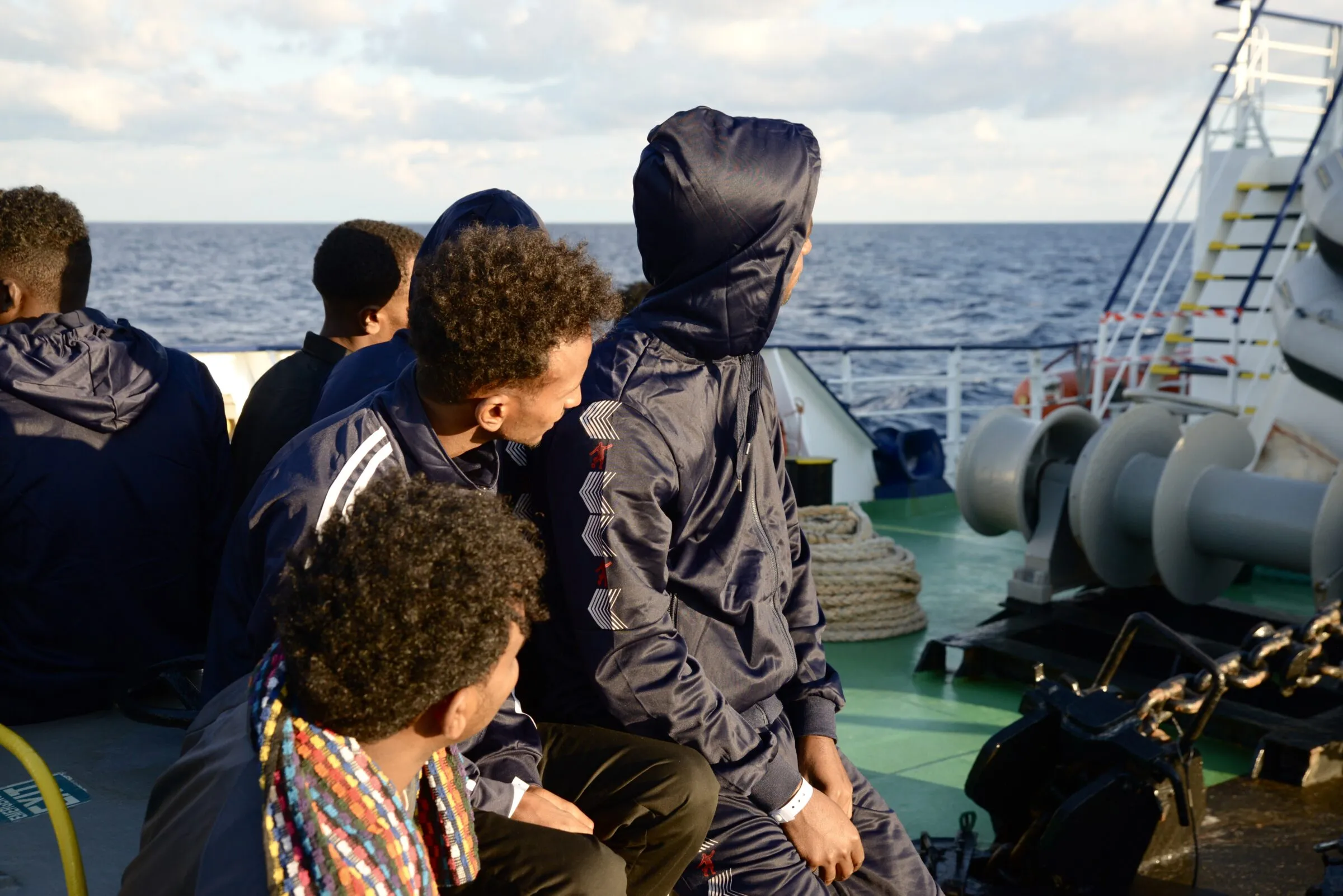
European authorities — led by figures such as Germany’s Friedrich Merz and Italy’s Giorgia Meloni, and driven by Brussels’ hardline approach — have repeatedly undermined search-and-rescue NGOs in the Mediterranean, with predictable human tragedy as the result.
Since Friedrich Merz became German chancellor in May 2025, funding to national search-and-rescue organisations has been cut off entirely.
The conservative chancellor and some other EU leaders accuse German NGO vessels operating in the central Mediterranean — where crossings are most deadly — of acting as a “pull factor” that supposedly encourages people to head for Europe.
Germany’s foreign affairs minister Johann Wadephul even claimed sea rescue organisations are “enabling people-smuggling gangs to carry out their business” in 2023, a charge used to justify halting essential support.
“Of course we know that people don’t travel into the Mediterranean because there are NGOs [there]. They are escaping famine, conflict, violence, some people are even trapped in Libya,” said Sofia [the charity’s workers use first names only], communications coordinator on board German charity SOS Humanity’s mothership.
After rescuing 28 people adrift in an overcrowded dinghy last week, SOS Humanity has now rescued 5,213 people in total since August 2022. A third of them were children.
SOS Humanity had been part of a German funding pool that previously split €2m from the federal humanitarian aid budget between search-and-rescue groups. Rising fuel prices and soaring legal bills from administrative barriers and port detentions imposed by Italy have left rescue NGOs with a huge budget shortfall.
This squeeze has been exacerbated since Giorgia Meloni’s government took office in 2022.
Charities operating in the central Mediterranean have been constrained by decree 1/2023, which forces them to sail directly to the assigned port of safety after a rescue — effectively preventing them from conducting multiple rescues on a single patrol.
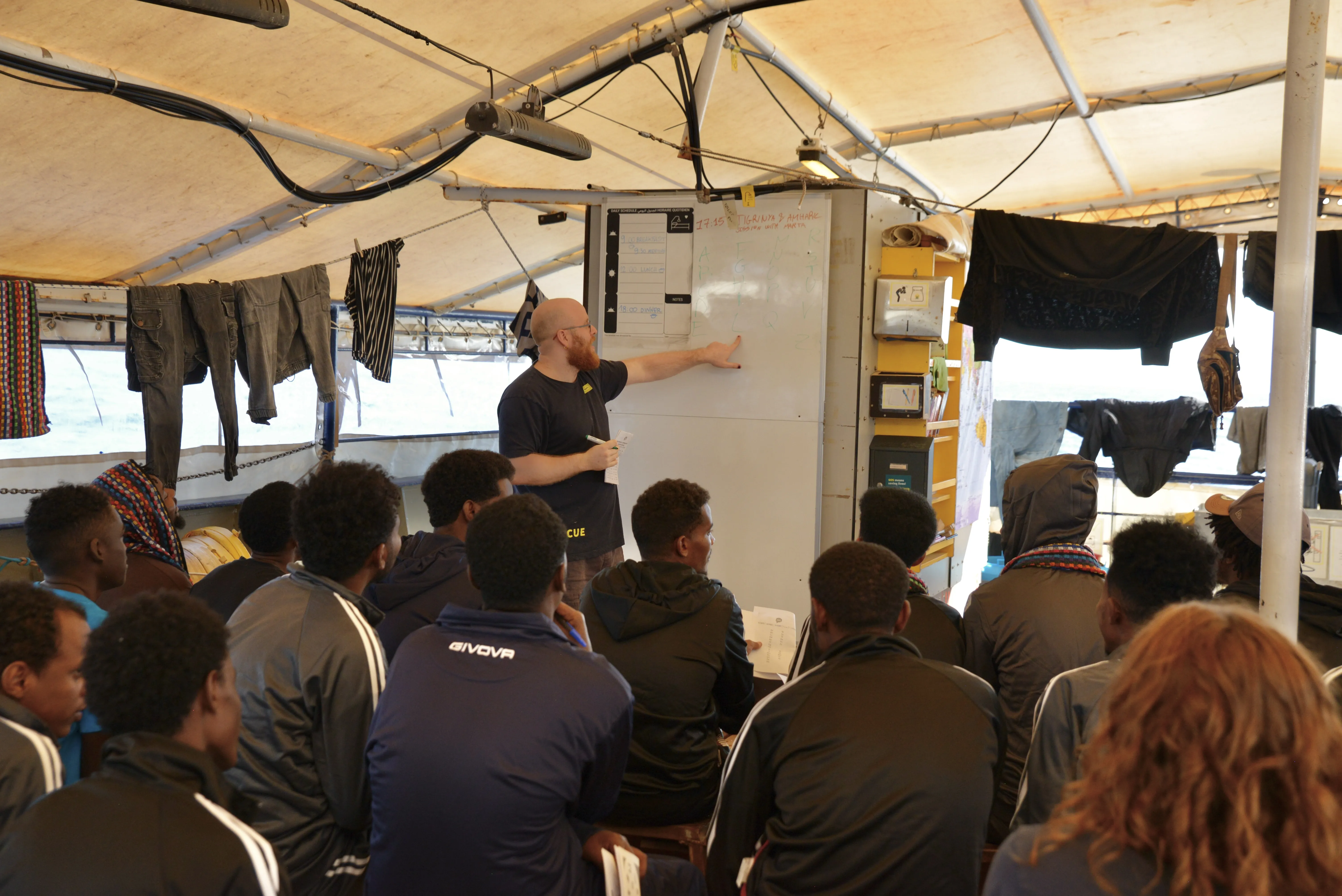
Search-and-rescue NGOs have had to rely increasingly on volunteers like Tommaso, a cook on board SOS Humanity, pictured teaching survivors Italian (Source: Gaia Neiman, EUobserver)
Italy’s assigned ports are often days away from where rescues occur. The requirement to head to these distant ports forced SOS Humanity to sail an extra 24,745 km and spend 62 additional days at sea in 2025 alone. With fuel costs rising, the organisation has been compelled to cut back operations for 2027.
Costly ops, and an alarming human cost
At a time when their presence is more urgently needed than ever, NGOs face legal and financial obstacles erected by governments more concerned with deterrence than with saving lives.
This article continues, but the full version is available only to EUobserver.com subscribers. Visit account.euobserver.com/membership