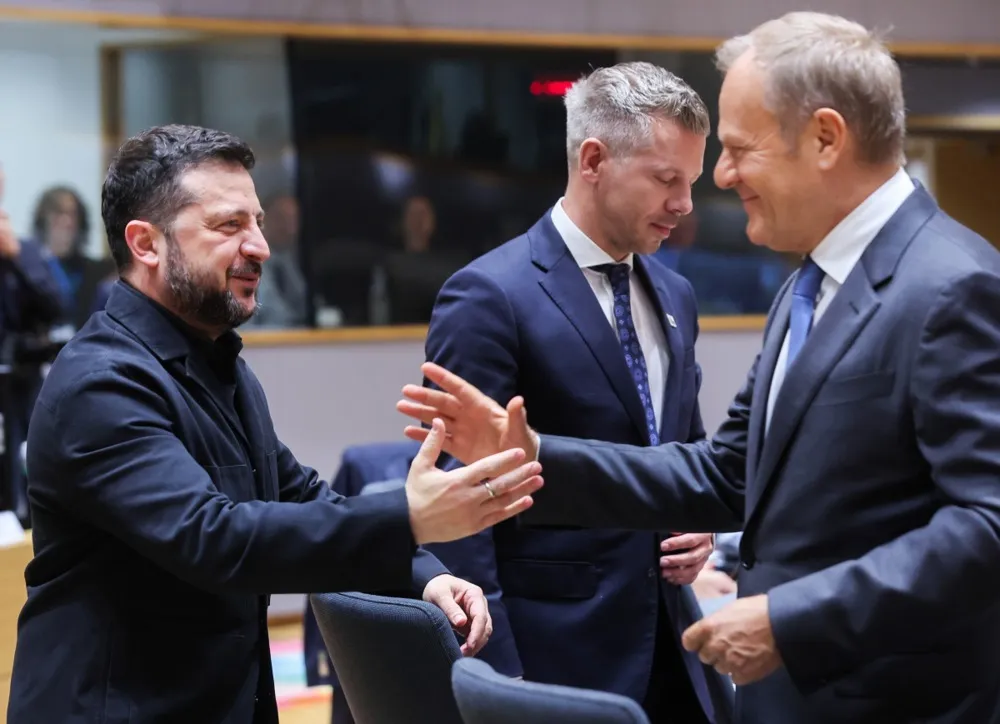
A summit of the European Political Community on Thursday (12 November), followed a day later by an informal EU leaders’ gathering in Dublin, will dominate next week — at least on paper.
Officially the EU summit is meant to focus on AI, but the unavoidable issue is Russia’s role in the conflict with Ukraine. Delegations from Kyiv and Moscow are due in Abu Dhabi on Wednesday for US-mediated talks, and the conspicuous absence of a strong, unified EU presence only underscores how divided Europe remains while Washington plays mediator.
Despite last week’s approval by US president Donald Trump of 500 Patriot missiles worth $2.1bn (€1.8bn) for Ukraine, it is far from certain how Washington — and its domestic political turmoil after the midterms — will shape the Abu Dhabi discussions. Even within the Republican camp there are dissenting voices, such as vice president J D Vance, who criticised what he sees as risky Middle East adventurism linked to Iran.
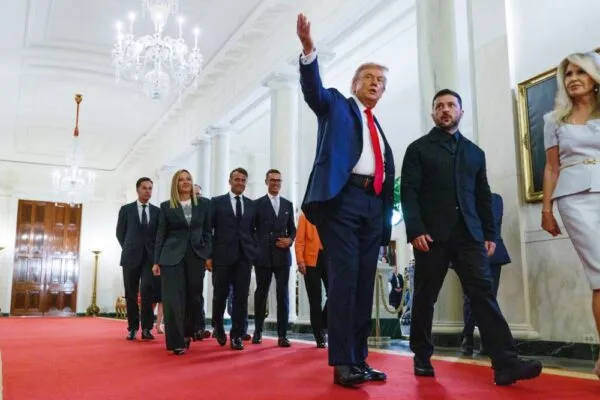
Read moreTrump vows ‘beautiful’ Russia deal, as EU agonises over which envoy to send to Ukraine peace talks
Meanwhile, the EU will nonetheless be well represented at a G7 foreign ministers’ meeting in Marseille on Monday and Tuesday, where the talks on Russia and Ukraine will top the agenda. EU foreign affairs chief Kaja Kallas will attend alongside her counterparts from Germany, France and Italy.
After a letter from Italian premier Giorgia Meloni, European Council president António Costa has added a debate on Ukraine to the Dublin agenda — an attempt to force the bloc into speaking with one voice on a matter where unity has so often been lacking.
This article continues, but the full version is available only to EUobserver.com subscribers. Visit account.euobserver.com/membership