
LONDON — John Healey wants to keep his debut budget low-key — but he also needs to convince the British public that his government truly understands their struggles.
The chancellor delivers the first financial statement of the Andy Burnham era on Wednesday. The pitch: “Breathing space for today” mixed with a promise of “fresh hope for the future.”
But with the conflict in the Middle East driving up costs worldwide, government borrowing at its highest level in a year, and businesses warning they’re taxed to the limit, Healey faces an uphill task.
Here’s what our reporters will be poring over as the fiscal picture is unveiled at 12.30 p.m. U.K. time Wednesday.
U.K. Political Editor Dan Bloom
I’ll go straight to the big table two-thirds of the way through the ‘red book,’ where Treasury officials list total tax increases and spending cuts, and then the “headroom” against Healey’s fiscal rules in the executive summary.
The briefing suggests these numbers will be smaller than the £26 billion in tax rises and £23.6 billion in headroom former Chancellor Rachel Reeves recorded in March.
The Treasury is framing this around “everyday fixes” and non-tax measures like cutting business red tape. But these figures will also show how the fallout from the Middle Eastern conflict has curtailed Burnham’s ambitions.
And they signal something else — the budget itself may not be the headline act this time. In the next seven weeks we’re expecting a major review of the benefit system, a U.K.-EU summit, a “10-year plan” and a white paper on “rewiring the state.”
Next year’s spending review is when the truly difficult choices arrive — and the budget will give an early indication of how tough they’ll be, mapping out a path for departmental spending over coming years.
U.K. Political Correspondent Sam Blewett
Burnham’s team has talked up “everyday fixes” — low-cost measures aimed at easing everyday annoyances.
Headphone dodgers? You could face fines. Being ripped off by parking tickets? There’s been coverage about protecting drivers. Facing higher grocery bills? The government has suspended some tariffs on certain food items.
That will buy the government a measure of goodwill, creating a sense that it isn’t entirely helpless in the face of global shocks. But it will only go so far.
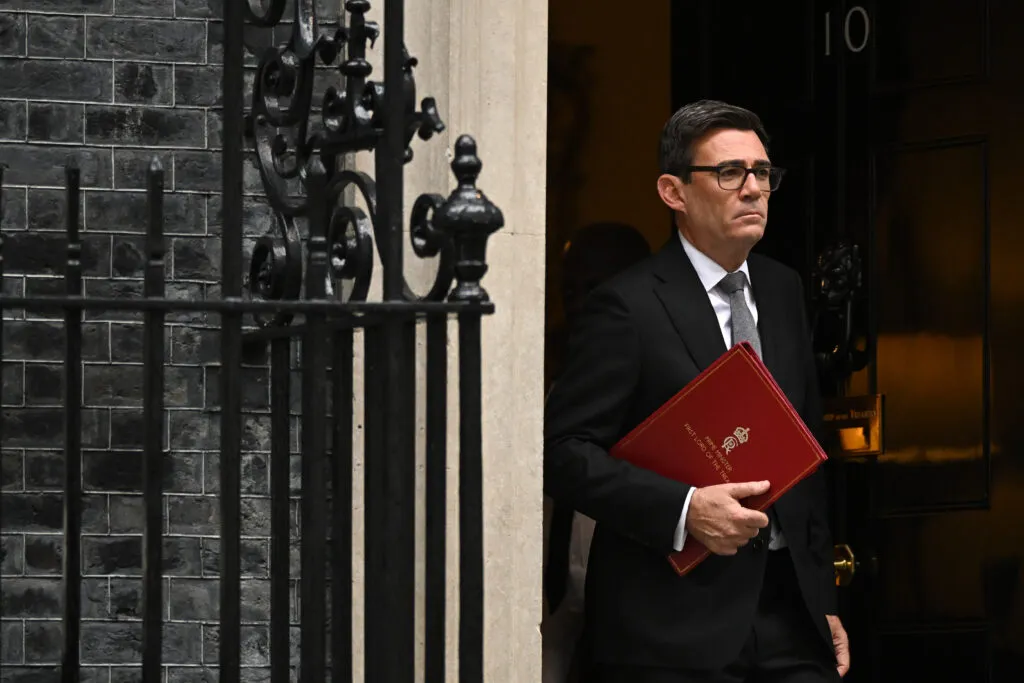
Burnham leaves Downing Street in London for prime minister’s questions on Oct. 21, 2026. | Leon Neal/Getty Images
Healey is under pressure to show bolder moves on what really matters — interventions that bring down the cost of living. We already expect energy bill support, a fuel duty freeze, help for pensioners and a rise in the minimum wage. All eyes will be on whether Healey has any further measures.
However costly any support is to the exchequer, it may prove small compared with the impact of the Strait of Hormuz tensions. This is a self-declared “cost of living government,” after all.
I’ll scrutinize the Office for Budget Responsibility’s forecasts to see where real household disposable income is headed. Analysts at the Institute for Fiscal Studies and the Resolution Foundation will follow with detailed analysis.
Ultimately, the people who count will be those at the dinner table, nursing pricier pints and grumbling at petrol stations. Will this budget give Britons reason to believe Burnham’s government can ease the pain, or will voters see more of the same cautious bureaucracy and demand bolder change?
Senior Foreign Correspondent Esther Webber and U.K. Defense Reporter Mason Boycott-Owen
The key question for us is how Healey — who resigned as defense secretary in the last days of the previous government over related concerns — demonstrates an increase in defence spending against a difficult backdrop.
The chancellor has sought to manage expectations for the Ministry of Defence, initially saying he would only cover a £4.7 billion shortfall in its already-announced Defence Investment Plan.
In recent weeks, however, the Treasury has suggested he could do more to move the U.K. towards spending 3% of GDP on defence — a stepping stone, in Healey’s view, to the NATO aspiration of 3.5%.
Some reports indicate increases might come from funds routed into vehicles like the British Business Bank and a National Wealth Fund.
But Healey will have to answer awkward questions about his commitment to fulfil promises he made months ago that were framed as central to U.K. security — now that he controls the purse strings.
Financial Services Reporter Eleanor Myers
A rise in bank taxes looks likely in today’s budget — but the City of London will watch nervously how steep the increase is. I’ll be looking at how much tax is raised, whether any changes are temporary, and whether the City — Britain’s financial powerhouse — gets compensating measures.
The simplest option for Healey is to raise the surcharge banks pay on top of corporation tax. That surcharge currently stands at 3% after being cut in 2023. Reversing it to 8% would upset the banks and might still fall short of what some campaigners want.
I’ll also be watching how bond markets react to the first budget under Burnham. Despite the prime minister warning that Britain was “in hock” to the bond markets before taking office, the odds favour a cautious budget without big spending commitments that could spike borrowing costs.
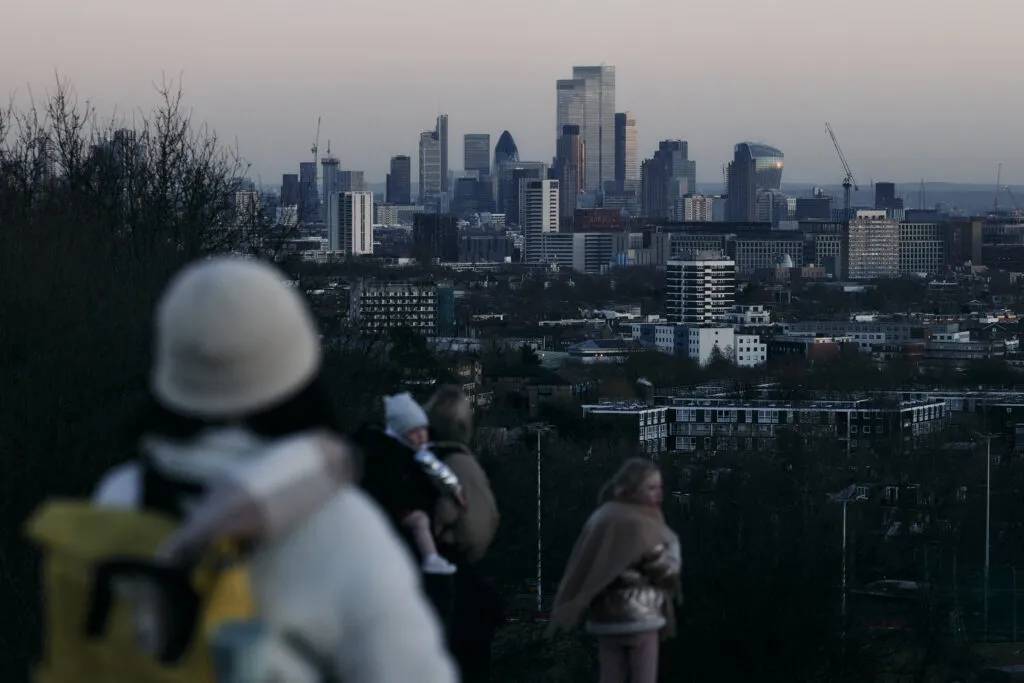
People view the City of London from Parliament Hill on Jan. 3, 2025. | Benjamin Cremel/AFP via Getty Images
Any policies designed to placate bond markets will have to be balanced against demands from Labour MPs. It’s a tricky tightrope, and Labour showed under the previous leadership that its backbenchers can rebel when it matters.
Senior U.K. Energy Correspondent Charlie Cooper
Britain is facing a sharp rise in energy bills; this budget will show how much Healey and Burnham can do to help.
Latest forecasts for the energy price cap are grim. Energy firms expect average annual household bills to rise by more than £450 in January, and possibly more in April, driven largely by gas. The fallout from the U.S.-Israeli conflict with Iran has pushed wholesale prices up.
Healey knows how bleak things look, but he may not have the fiscal room to offer big relief. Burnham has hinted at removing gas standing charges from bills, which could save an average household a modest £27, according to one estimate. Meanwhile, payments to around 6 million low-income households through the Warm Homes Discount are likely to get a top-up of between £100 and £150.
Business could get details of a 10-year plan to bring their energy costs closer to European competitors.
But with living and operating costs set to rise so sharply, that may not be enough.
“There’s strong awareness inside government of how bad it will get,” one senior official told us, “but there aren’t pockets deep enough to do everything we might like.”
We’ll also be watching to see whether net zero schemes — such as wider rollout of electric heat pumps — could face cuts to cover shortfalls in defence spending.
Technology Reporter Joseph Bambridge
Healey put AI and innovation at the centre of his growth pitch in a pre-budget speech in September.
The government has signalled a £600 million package to protect the U.K. from AI risks while growing the sector, describing it as a “distinctively British” approach to managing risks while capturing benefits.
The question is whether Wednesday will bring further measures to support the U.K.’s tech and AI sector, with trade groups urging bold moves to lower energy costs, address planning delays, and help firms invest in AI and upskill staff.
Startups want tax relief and reforms to procurement and regulation. Founders have pressed for incentives to reinvest earnings in the U.K., and they scored a win after Healey said he would not raise capital gains tax.

Trade groups are calling for bold moves to lower energy costs, tackle planning delays, and help firms invest in AI and upskill workers. | Henry Nicholls/AFP via Getty Images
AI is also likely to be used to make Whitehall more efficient, as seen under the previous chancellor.
The tech sector will be watching how any defence spending uplift might benefit drone makers and military tech firms.
Trade Reporter Caroline Hug
I’ll be looking for details of the chancellor’s VAT crackdown on foreign sellers who register as U.K. companies to avoid paying the tax. Healey is expected to make online marketplaces responsible for collecting VAT owed by all retailers.
We’re also waiting to see whether the government will introduce a handling fee for small packages below the de minimis threshold, similar to rules already used in the EU.
Finally, we’ll be looking for more detail on the continued suspension of tariffs on more than 100 food, drink, fuel and fertilizer products.