PARIS — EU diplomatic chief Kaja Kallas has picked up a new adversary in her row with Brussels: Marine Le Pen.
The far-right French leader says she wants to dismantle, or at least sharply shrink, the EU’s diplomatic arm should she win the 2027 presidency, according to four National Rally officials.
“The reality is that [Kallas’s] usefulness is very limited, and she duplicates the diplomacy of member states,” said Charles-Henri Gallois, adviser to National Rally President Jordan Bardella. “No one recognizes her legitimacy, particularly not the United States, nor China.”
Those comments underline mounting pressures on the EU’s institutions as nationalist parties from France to Germany and Poland look to claw back powers from Brussels — and foreign policy is high on their list. They have also piled extra pressure on Kallas and the European External Action Service, which have been locked in a long turf battle on foreign policy with the European Commission led by Ursula von der Leyen.
Inside the National Rally, the view is blunt: the EU’s diplomatic service is an unnecessary expense and an obstacle to nation-states asserting themselves on the world stage.
One headline battleground is Ukraine, where Kallas and Le Pen are deeply divided — although they have avoided direct public clashes. The former Estonian prime minister is one of President Vladimir Putin’s most vocal Western critics and a firm backer of Volodymyr Zelenskyy, while Le Pen argues for an international peace conference to end the conflict and warns that Europe has already stretched itself thin supporting Kyiv.
“Kallas has used very warrior-like language on Ukraine,” said National Rally MEP Jean-Paul Garraud. “We support Ukraine but if we expressed ourselves like that we would be in total war” with Russia, he added — a reminder that bellicose rhetoric risks dragging Europe into a wider confrontation.
Le Pen has saved her fiercest attacks for von der Leyen, long accused by the far right of overstepping. But if a far-right president takes office in Paris, Kallas and the EEAS could become collateral victims of a broader effort to roll back Brussels’ reach.
Le Pen is the frontrunner ahead of next year’s presidential vote. On a recent Brussels visit she vowed to downsize the European Union if she reaches the Élysée.
“France will no longer accept that the Commission exercises diplomatic competences, and even less military or intelligence competencies,” she told reporters. That programme would include clipping the EEAS’s wings, the National Rally officials said on background.
Such moves would set the party on a collision course with pro-European groups that see the EU’s diplomatic arm as an essential collective tool as global competition intensifies.
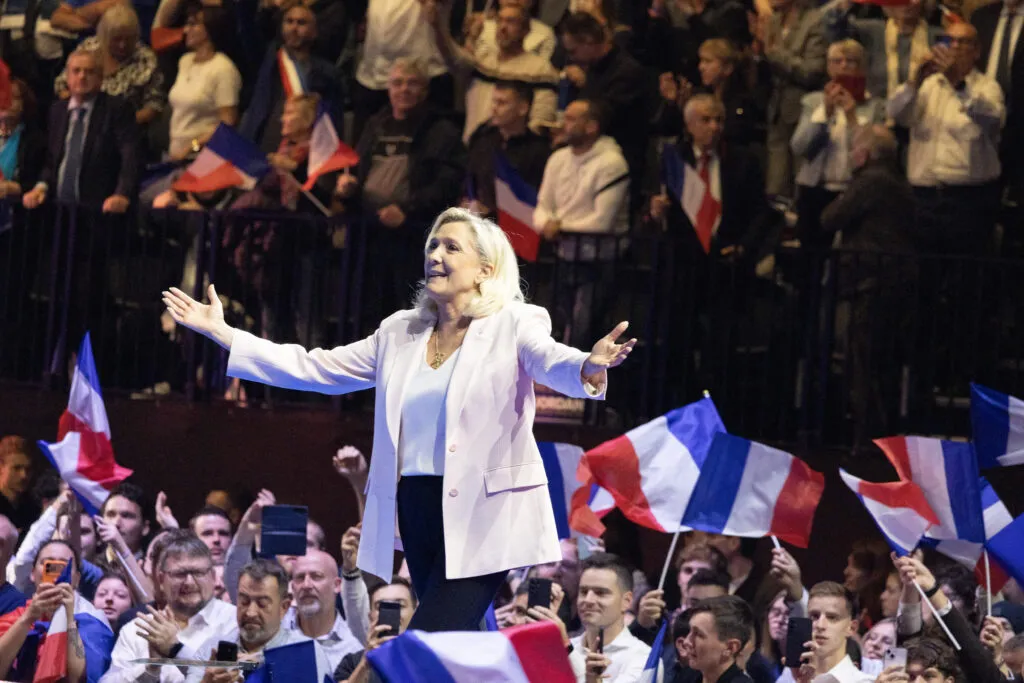
Marine Le Pen greets the audience after a campaign rally in Orléans, France on Oct. 25, 2026. | Quentin de Groeve/Hans Lucas/AFP via Getty Images
“If Marine Le Pen becomes president of France, she will quickly realise that … France is a medium-sized country on the global stage,” said Irish Renew MEP Barry Andrews, who chairs the European Parliament’s development committee.
“Without the collective power of Europe, France has no chance going up against the U.S. or China alone,” he said.
The EEAS pushed back. “Across Europe, the far right is against the very idea of European cooperation,” said an EEAS spokesperson.
“EU diplomacy defends European interests, including those of France. The EU’s global delegation network is a major strategic asset,” the official added.
Money matters
The campaign against Kallas and her diplomats also comes as the National Rally prepares for a showdown with the Commission over France’s EU budget contribution if they win. Last month, the party unveiled plans for an €11 billion cut to France’s EU contribution for 2027, which is currently expected to total roughly €30 billion.
Polls put Le Pen on about 34% in the first round, well ahead of far-left leader Jean-Luc Mélenchon and center-right hopefuls. Surveys also suggest she would beat many potential rivals in a runoff.
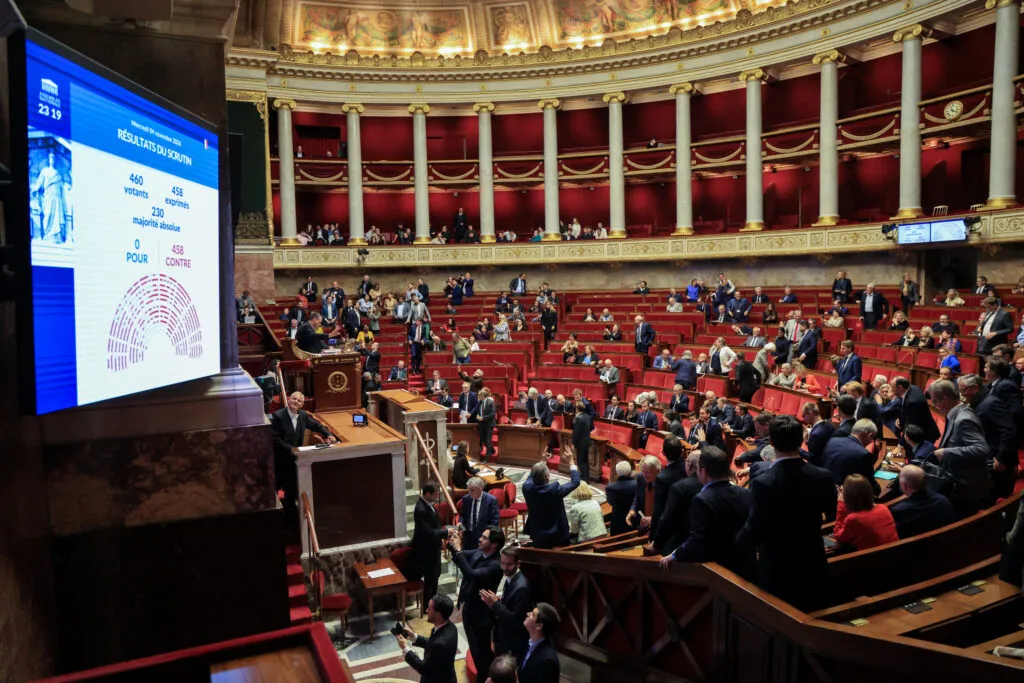
A large screen displays the results of a vote during a session of the National Assembly on the first-reading examination of the 2027 draft state budget bill in Paris on Nov. 4, 2026. | Ludovic Marin/AFP via Getty Images
While France could not unilaterally strip the EEAS budget, the National Rally says it expects like-minded partners in Italy, in Spain’s Vox (which could end up working with the centre-right), and in the Czech Republic under Andrej Babiš.
The fight could get ugly as the Commission and Le Pen tussle over cash.
“The EEAS is great for friends of friends, who want jobs,” said one National Rally official. “The real estate bought or rented by the EEAS is a waste of money. I’m shocked to see the amounts involved in local contracts; it’s unbelievable,” said a National Rally MEP.
Le Pen’s critique echoes concerns from some European governments about the efficiency of the EU’s foreign policy apparatus, with France and Germany jointly proposing reforms to the EEAS.
Senior diplomats worry the EEAS lacks the policy levers to shape foreign relations. The Franco-German initiative suggests closer integration of the EEAS with the Commission, which holds a bigger budget and control over trade and technology policy.
That debate comes as officials internally discuss significant cuts to the bloc’s external spending: simulations have examined slashing parts of the Global Europe envelope by as much as 40% in the next long-term budget.
The EEAS itself, which has an annual budget of close to €1 billion and employs more than 5,200 people globally, is working on internal reforms that Secretary-General Kajsa Ollongren is expected to present to staff later this month.
Major cuts would hollow out the EU’s network of over 100 global delegations, staffed by diplomats and Commission personnel from external-facing units like DG MENA (the Directorate-General for the Middle East, North Africa and the Gulf).
International organizations have warned strongly against plans to slash the EU’s development aid, with the United Nations secretary-general urging EU leaders to preserve funding.
Giorgio Leali contributed reporting.